
ALL YOU NEED TO KNOW ABOUT SYNEDICA RETATRUTIDE
About Us
What Is Retatrutide
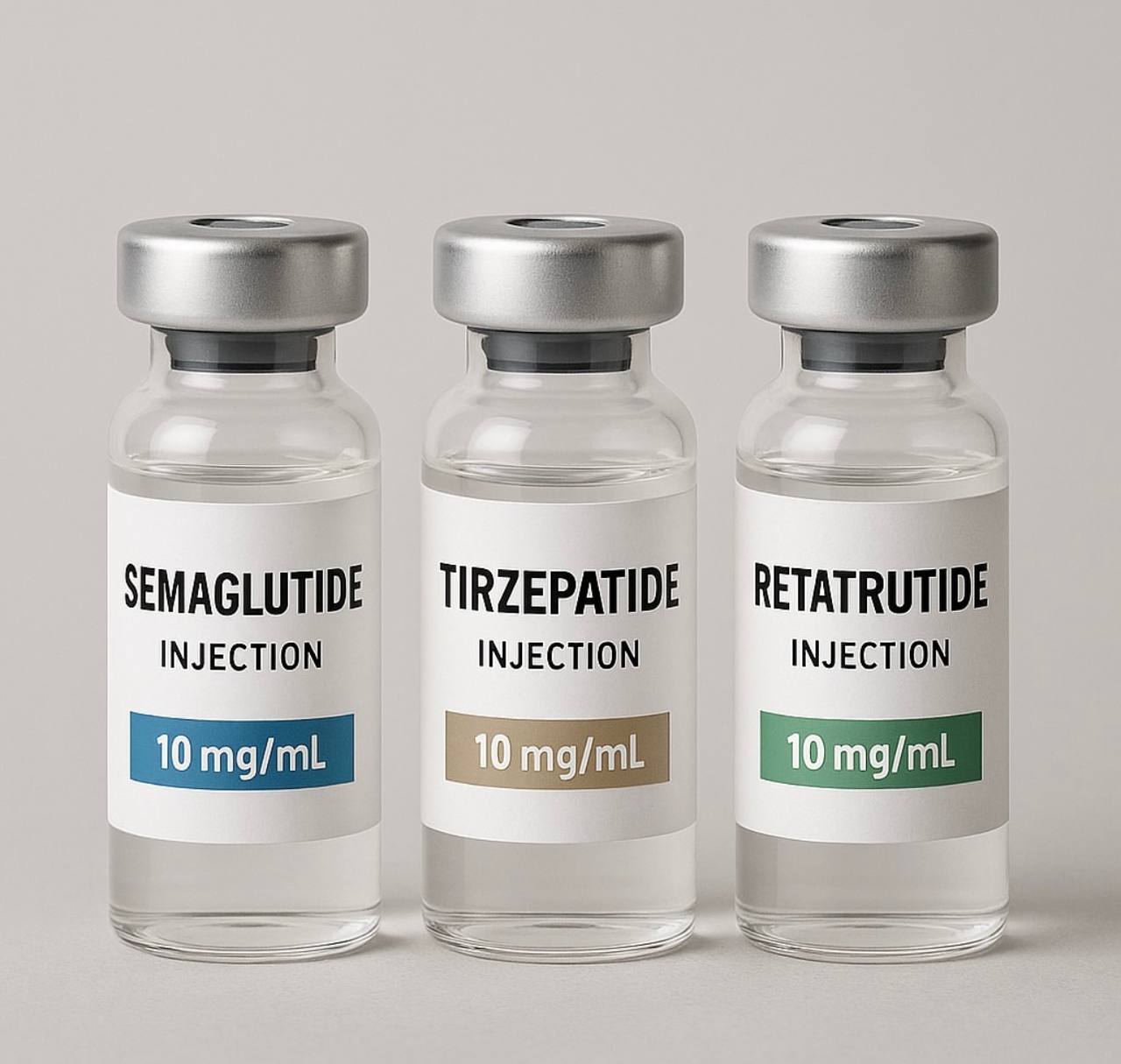
• Retatrutide (also known by the development code LY-3437943) is an investigational peptide drug being developed by Eli Lilly & Company.
• It is not yet approved by regulatory authorities like the U.S. FDA; it is still in clinical trials.
⸻
Mechanism of Action
What makes Retatrutide special is that it is a triple agonist. It targets three hormone receptors simultaneously:
1. GLP-1 receptor (Glucagon-like peptide-1) – enhances insulin secretion (especially when glucose is high), slows gastric emptying, and helps increase satiety (feeling full).
2. GIP receptor (Glucose-Dependent Insulinotropic Polypeptide) – helps stimulate insulin release, may have effects on fat metabolism, and works in synergy with GLP-1 to regulate glucose and appetite.
3. Glucagon receptor (GCGR) – this is perhaps the most novel aspect: activating the glucagon receptor can increase energy expenditure, stimulate fat breakdown, and affect how the body uses glucose. The combination of all three makes Retatrutide more powerful, in theory, than drugs that act on only one or two of those.
Because of its design, Retatrutide has effects on:
• appetite suppression
• slowing digestion / gastric emptying (so people feel full longer)
• increasing energy expenditure (burning more calories)
• improving insulin sensitivity and reducing high blood sugar
⸻
Evidence & Clinical Trial Results
So far, the evidence is promising but still preliminary (Phase 1 / 2). Here are some key findings:
• In a Phase 2 trial involving adults with overweight or obesity (but without diabetes), Retatrutide was given once weekly over 48 weeks.
• At 24 weeks (about 6 months), percentage weight loss averaged: